
Walk into any successful retail brand today, and you’ll notice something different – their marketing doesn’t speak at customers; it speaks to them. From tailored offers in your inbox to loyalty rewards that feel hand-picked, the most effective retailers are mastering the art of personalised retail campaigns.
These campaigns go far beyond basic demographics or seasonal discounts. They use real customer data to deliver experiences that feel timely, relevant, and genuinely useful. In times where shoppers expect brands to know them, personalisation is a new standard for retail growth.
What is a personalised retail campaign?
A personalised retail campaign tailors messages, offers, or experiences to each shopper using their purchase history, preferences, and engagement patterns. Instead of one-size-fits-all promotions, retailers design campaigns that meet customers where they are – whatever part of their life journey that might be.
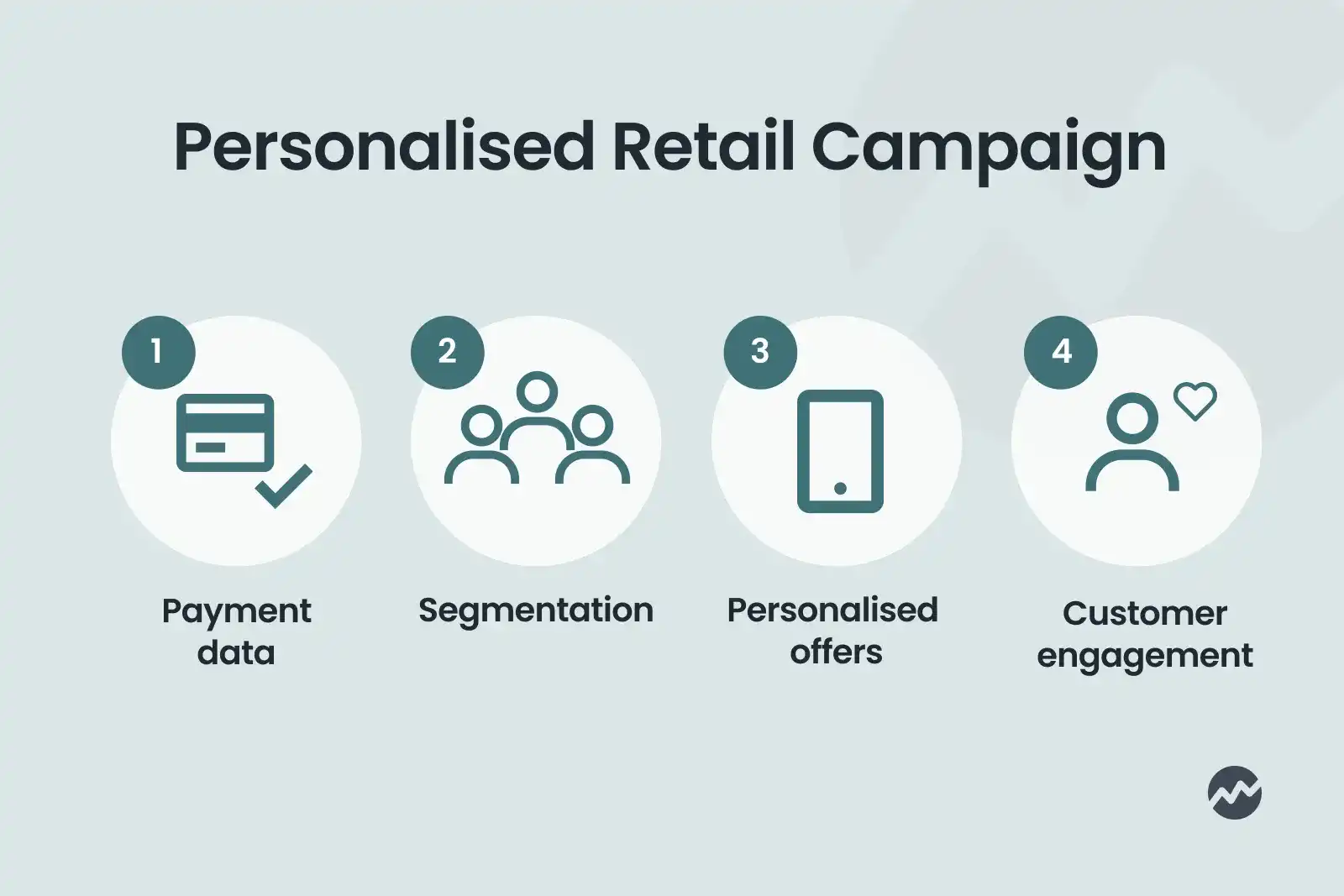
For example, a fashion retailer might send curated outfit recommendations based on past orders, while a grocery chain might issue loyalty discounts tied to favorite brands. Defining personalisation starts with clarifying your objectives – increasing repeat purchases, growing average order value, or reducing churn – and aligning data, creative, and channels around those goals.
To make this process scalable, many brands leverage card-linked marketing solutions that connect transaction data with marketing channels in real time.
Why personalisation matters in modern retail
Retailers that invest in personalisation see measurable gains. According to McKinsey, companies that excel at personalisation generate 40% more revenue from those activities than average players.
Personalised campaigns build stronger emotional connections and help brands stand out in crowded markets. They encourage repeat purchases, increase customer lifetime value, and create loyalty and retention campaigns customers actually want to use.
Explore how Dateio’s customer data platform for retail enables retailers to unify data, trigger campaigns, and measure performance based on verified spend.
Connecting payment data: the core of payment-based retail personalisation
Payment data is the most accurate reflection of customer intent, making it a key enabler of payment-based retail personalisation. It shows what shoppers buy, how often they purchase, and how much they spend. When connected with CRM or loyalty profiles, payment data transforms generic targeting into spend-based segmentation that drives meaningful engagement.
For instance, a retailer could:
- Identify high-value spenders and offer VIP rewards.
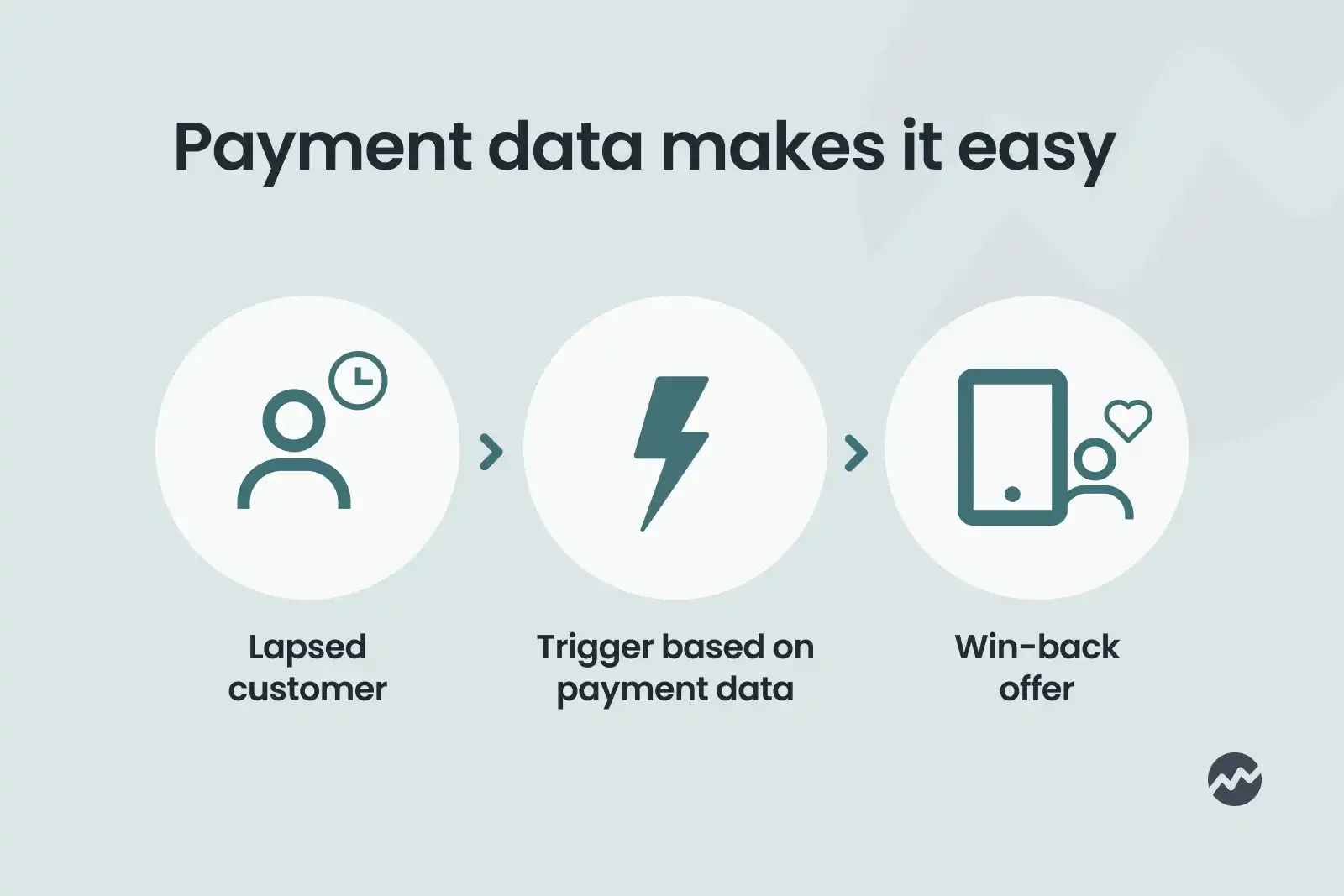
- Detect lapsed customers through lack of activity in payment data and trigger win-back offers.
- Link in-store POS and online checkout data to create a unified customer profile.
To achieve this, integrate your payment systems, POS, and marketing tools through a real-time marketing trigger platform. Always apply tokenisation and consent controls to stay compliant with PCI and GDPR regulations.
At the end of the day, a true power of personalised retail campaigns lies in verified ROI. By linking campaigns to card and POS data, you can accurately measure incremental lift and loyalty impact.
How to design personalised retail campaigns
Creating a personalised retail campaign follows a structured approach:
- Define Objectives and KPIs: Decide whether the goal is upsell, retention, or reactivation.
- Map Customer Journeys: Identify personalisation moments - from browsing to post-purchase.
- Unify Customer and Payment Data: Connect POS, loyalty, and e-commerce records for a single view.
- Set Up Trigger Logic: Example - “If customer spends over $100 in cosmetics → send VIP skincare offer.”
- Test, Measure, and Optimise: Use A/B testing and incremental sales attribution to refine performance.
Examples of retail personalisation using transaction data
- Post-Purchase Rewards: Send a thank-you coupon after a high-value transaction.
- Category-Based Offers: Suggest complementary products based on past category spend.
- Reactivation Campaigns: Detect customers with no payments for 60 days and send a comeback incentive.
- Tiered Loyalty Benefits: Reward top spenders with early access or exclusive events.
- Smart Receipts: Include personalised product suggestions or QR codes for loyalty enrollment.
These use cases showcase how transaction data insights turn customer spend into real-time engagement opportunities.
How payment data improves customer segmentation
Traditional segmentation relies on demographics or browsing behavior – good, but not enough. Payment-linked marketing adds a layer of truth by revealing actual buying power and intent, which is why it underpins effective payment-based retail personalisation.
You can segment by value (total or average spend), frequency (purchase regularity), category mix (product preferences) or recency (time since last transaction).
By integrating these insights into your CDP, you’ll unlock real-time, data-driven personalisation that drives measurable results.
Challenges and best practices
Personalisation delivers strong results but requires balance and responsibility. Avoid over-personalisation that feels invasive, maintain strict data hygiene, and communicate transparently how data enhances customer experience.
Best practices:
- Prioritise consent and transparency.
- Keep personalisation relevant, not “creepy.”
- Ensure data consistency across all channels.
- Regularly audit pipelines for compliance and accuracy.
For guidance, explore Dateio Platform’s data ethics and privacy approach to see how personalisation and compliance can coexist.
Conclusion
Personalised retail campaigns are the bridge between customer data and meaningful engagement. By connecting payment insights with smart campaign design, retailers can move beyond generic promotions to create moments that matter.
Start small: unify your payment and customer data, test one personalised trigger, and measure the impact. When done right, personalisation builds loyalty that lasts.
FAQs
A personalised retail campaign tailors messages, offers, or experiences to each shopper using their purchase history, preferences, and engagement patterns to deliver relevant and timely interactions.
Payment data is the most accurate reflection of customer intent, showing what shoppers buy, how often, and how much they spend, which enables precise, spend-based segmentation.
By linking campaigns to card and POS data, retailers can accurately measure the verified ROI, incremental lift, and loyalty impact driven by the personalised campaigns.
Retailers can segment customers based on their actual buying power and intent, such as total spend value, purchase frequency, product category preferences, or recency since the last transaction.


A content creator with a passion for emerging tech companies and the startup community. She uses her background in media and PR for writing, editing, and brand building. Her mission is simple: she loves a good story, and strives to make complex topics clear and simple.
