
Card-linked offers look simple from the outside. A user opens their banking app, sees “5% back at Starbucks,” taps once, pays with their card, gets money back. That’s the visible 10%. The other 90% is rules, data cleaning, merchant mapping, card-network hooks, and measurement logic – the real backbone behind personalised retail campaigns.
To keep this grounded, we will simplify the process that is similar to many banks and merchants. They all follow the same backbone: set up the offer, target the right cardholders, make visible in the banking interface, match the transaction, pay the reward, prove the lift.
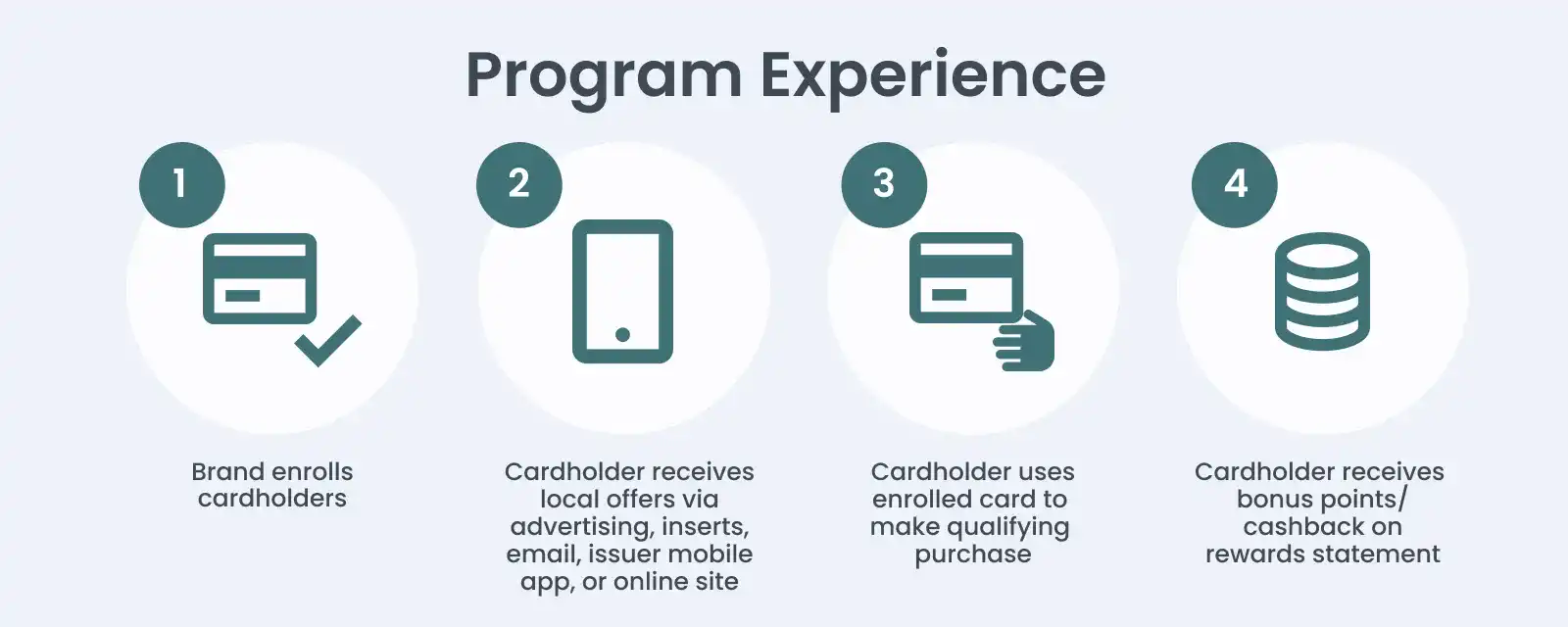
Let’s walk it through, start to finish.
Personalised retail campaign setup: define the business goal first
Every working CLO campaign starts with a blunt question: what do you want to move?
- New-to-brand customers
- Lapsed customers
- Basket size
- Store-level traffic
- Share of wallet in a category
Retailers or brands give the CLO platform a commercial brief (e.g. “+15% uplift in grocery in 30 days” or “win back customers inactive 60+ days”). Banks provide the pipes: access to anonymised transaction data, customer reach in the banking app, and the rule engine that decides who can see which offer. This is why CLO is attractive for banks too: one campaign can serve acquisition, retention, and card-in-wallet at the same time.
At this point the offer is still abstract. You have a brand, a reward type (cashback or voucher), a validity window, and basic suppression rules.
Merchant and data mapping: make the descriptors human
CLO only works if the system can reliably recognise where people spend. That means normalising merchant names, MCCs, and sometimes even store-level IDs. Raw card data is messy (“UBER *TRIP”, “UBER EATS”, “UBER BV”), so platforms enrich it to a canonical merchant like “Uber” with logo, URL, and brand category. In other words, you need clean, reliable and accurate data from enrichment providers like Tapix to fuel your CLO platform.
Banks like this step for an extra reason: cleaner display in the app means fewer “what is this charge?” calls. So data cleaning is part of the customer-trust layer.
Targeting: who should actually see the offer?
Now the campaign logic gets interesting. Instead of “everyone aged 25-44,” personalised retail campaigns use verified and highly personalised spend data. You can filter for:
- people who buy in the category but not from this merchant
- people who used to buy from this merchant but stopped 60+ days ago
- people whose baskets are below your target AOV
- people who tend to shop in the right geography
The point here is simple: CLO targeting is spend-based, not guess-based. You can even exclude risky or unprofitable segments (refund heavy, dispute heavy, outside delivery zone). That’s hard to do with cookie-based advertising, but very simple if you already see the card history.
Publishing in the banking app: the moment of discovery
Once the audience is ready, the offer has to be pushed somewhere the customer actually looks. For CLO that’s usually:
- the “Offers” tab or marketplace in the banking app
- in-line placement inside transactions (“You spent at Uber. Get 5% back next time.”)
- occasional push, usually geo- or cadence-based
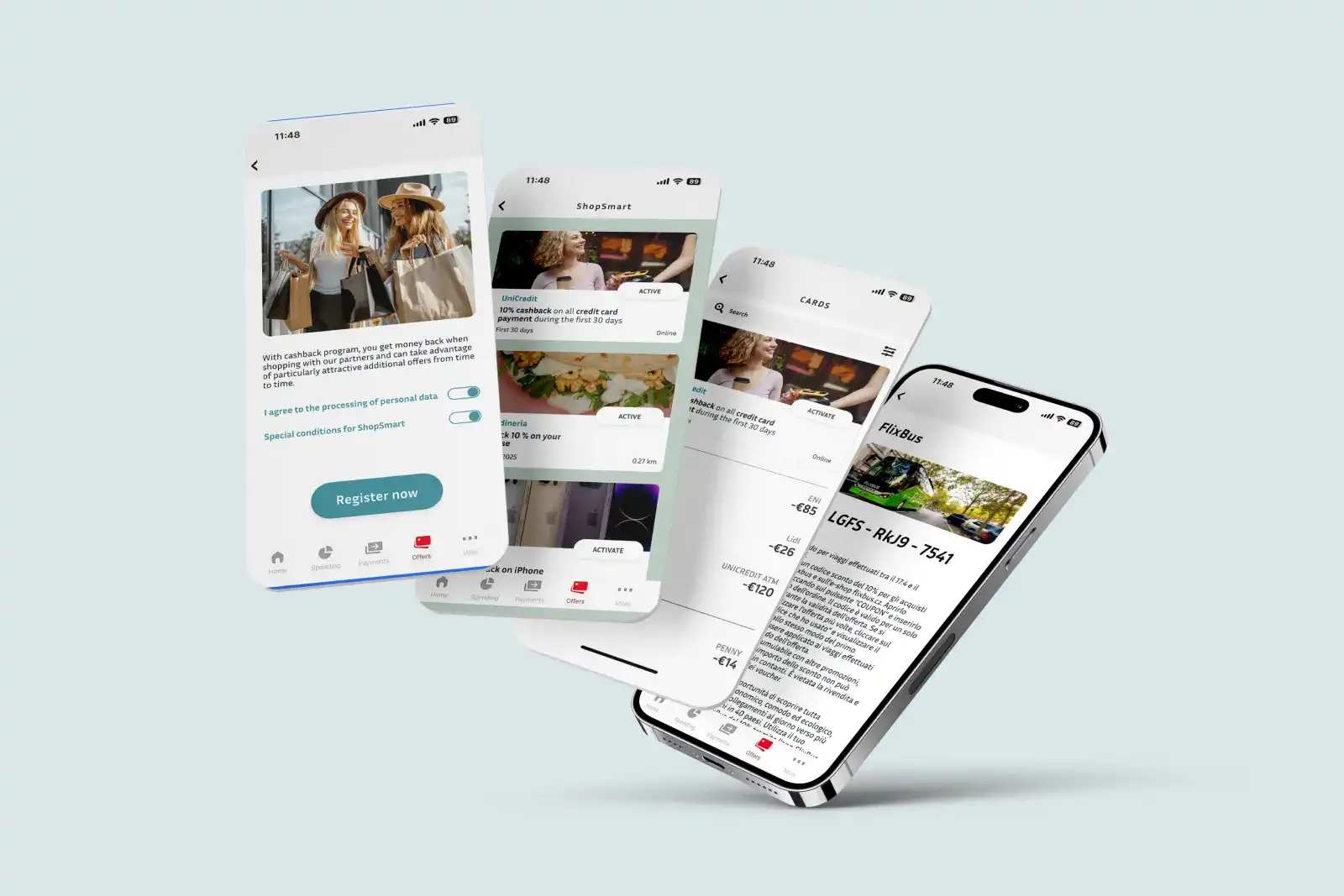
CLO gets people back into the banking app, and once they’re there, the bank can cross-sell credit, investments, or insurance. From the user’s perspective it looks easy: tap to activate. Under the hood, that tap writes a rule: “if this card pays at merchant X during the validity window, award benefit Y.”
Activation: the one thing you don’t screw up
Activation has to be frictionless. If you ask users to copy codes or present anything at the cashier, redemption will fall by half. CLO’s big promise is card-present or card-not-present payment equals reward. Once the card is registered or the offer activated, the bank or CLO partner matches a later transaction through secure APIs and awards the benefit. So activation needs:
- a clear value (“10% back on fresh groceries, up to 200 CZK”)
- a visible expiry
- accurate merchant (logo, brand name)
- obvious confirmation that the offer is now “on”
Anything less and support gets flooded. Or worse, users just leave.
Transaction matching: the quiet, hard part
Then the real test: the customer pays. The CLO platform listens for posted transactions from the bank (sometimes from the network, depending on the model). It checks:
- Is this card enrolled or activated?
- Is the merchant on the offer list?
- Is the transaction inside the time window?
- Does the amount qualify (min. spend, right currency, right country)?
- Has the user already hit the redemption cap?
If yes, the transaction is marked as qualifying and queued for reward. This is where good merchant mapping pays off. You can only auto-reward if you can reliably recognise the purchase, which is why combining CLO offers and enriched transaction data is absolutely vital for everything to go smoothly.
Reward settlement: show the money fast
Most CLOs promise “automatic cashback.” That means once the transaction posts and passes the checks, the system creates a reward entry. Depending on the bank, the cashback can be shown as a seperate line item in the account, is aggregated and paid out monthly or is shown inside the offers screen.
On the merchant side, reward settlement is tied to reporting. You only pay for real, matched transactions. That’s why CLO is often sold as “pay on performance.”
What to watch for
CLO breaks when:
- merchant data is too messy to match reliably
- the reward is too weak for the category
- the audience is too broad (everyone gets it, so no incrementality)
- payout is delayed
- customer care can’t see the same data and can’t confirm the reward
Why this matters for banks and retailers
Banks get a high-engagement surface inside their own app without building an entire media business from scratch. Retailers get performance media that is based on verified spend, not cookies, and they only pay for real results. And both get reporting that stands up in front of a CFO.
Card-linked offers work because they tie a clean offer to a real card, match it to a real transaction, and pay a real reward that can be proved in numbers. Everything else is just plumbing around that core. If banks and retailers keep the flow tight (clear merchant data, spend-based targeting, fast settlement, visible reporting), CLO stays what it’s meant to be: a performance channel sitting right inside the customer’s most trusted app.
FAQs
The process follows a core chain: define the business goal (e.g., acquisition or basket size), target cardholders using spend data, make the offer visible, match the transaction to the activated card, and finally, pay the reward and prove the sales uplift.
CLO targeting is spend-based, not guess-based. Instead of broad demographics, CLO uses verified card history to filter for specific actions, such as people who buy from competitors, lapsed customers, or those whose basket size is below the retailer's target.
Mapping is essential because raw card data is messy. Enrichment cleans this data to a canonical merchant name and category, allowing the CLO platform to reliably recognise the purchase, which is vital for automatic transaction matching and reward settlement.
The banking app offers bank-grade trust and the moment of discovery. This placement ensures frictionless redemption because the customer only needs to activate the offer once, and the reward is automatically applied without needing codes or coupons at the checkout.


Marketing professional with B2B, fintech, e-commerce, and retail experience. She connects banks and retailers through data-driven personalization and commerce media, turning complex topics into engaging stories.
