
You may have heard it: “Loyalty programs are old-school. CLOs are the new frontier.” Funny thing though: that framing misses the whole point. Because loyalty programs and card-linked offers (CLOs) aren’t really competitors. They’re more like two tools in the same toolbox. If used together, they cover what each alone cannot. When you treat them that way, you move from “Which one wins?” to “How do we win together?”
What the synergy between loyalty programs and CLOs means
When we say loyalty programs, we mean the reward systems many retailers and banks have used for years: points, status tiers, vouchers, member tiers, etc. Think of those paper stamp cards of old, or the app where you collect points for every purchase. These have evolved into digital platforms, yes – but the core idea remains: reward repeat behaviour, build emotional and economic ties between brand and customer. Research shows members in good loyalty programs can spend 12–18% more per year than non-members.
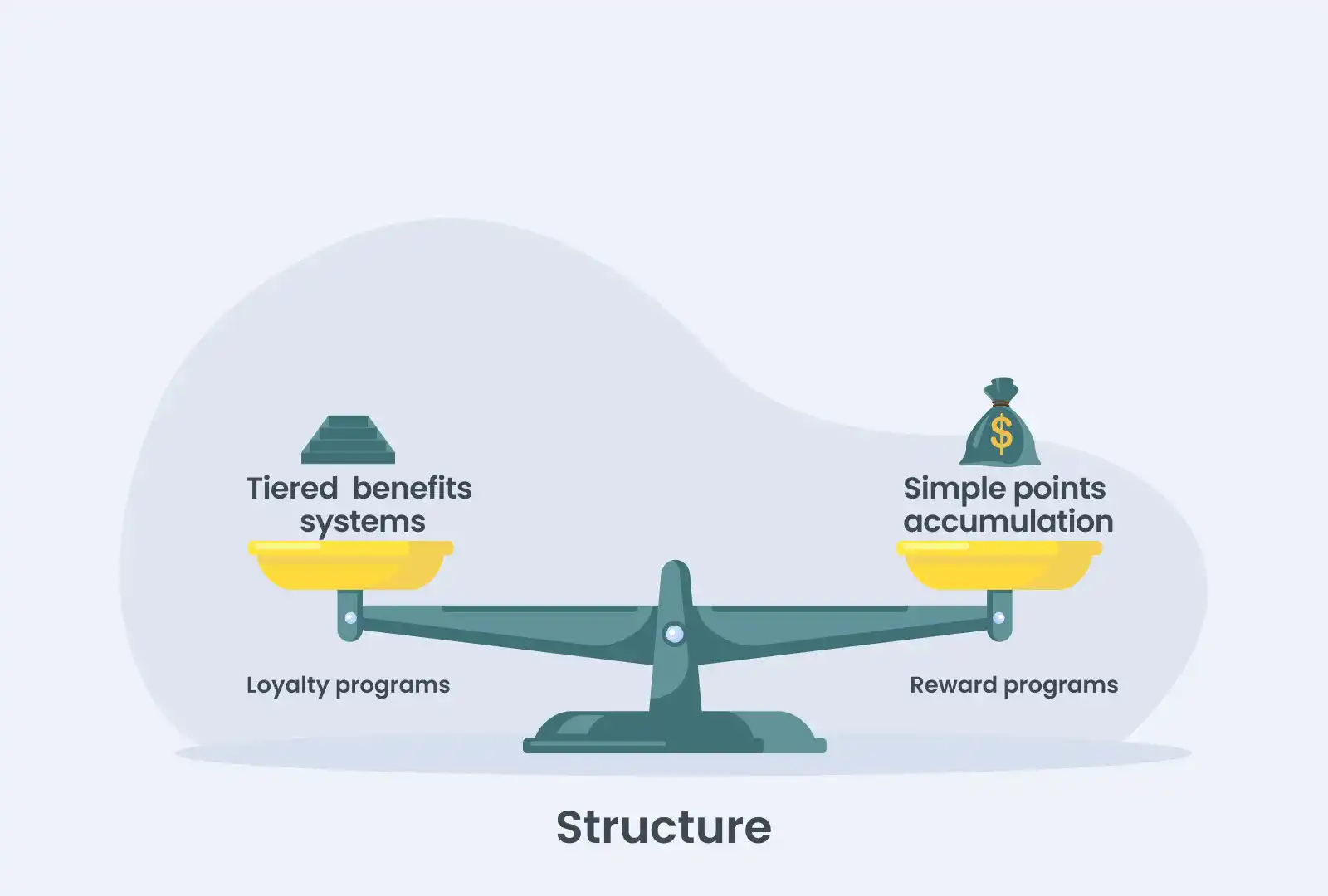
On the other hand, card-linked offers (CLOs) tie rewards (usually cashback or vouchers) directly to a payment card. You spend, you get the benefit automatically – no coupon code, no extra steps. They leverage actual transaction data. One guide defines them as “automated rewards… tied directly to consumer credit or debit cards.”
From rivals to companions
Here’s the odd thing: Marketing teams often pit them against each other. “Loyalty programs build relationships” says one team. “CLOs deliver measurable ROI” says the other. They talk about overlapping goals (repeat business, increased spend) and assume there’s only budget for one. But that’s a false choice.
One reason: loyalty programs struggle with engagement. According to Boston Consulting Group, consumer engagement with loyalty programs dipped 10% and loyalty itself dropped 20% among U.S. consumers in recent years. Meanwhile, CLOs offer a shiny promise of immediate measurable impact. That contrast fuels the “which one do we pick” question.
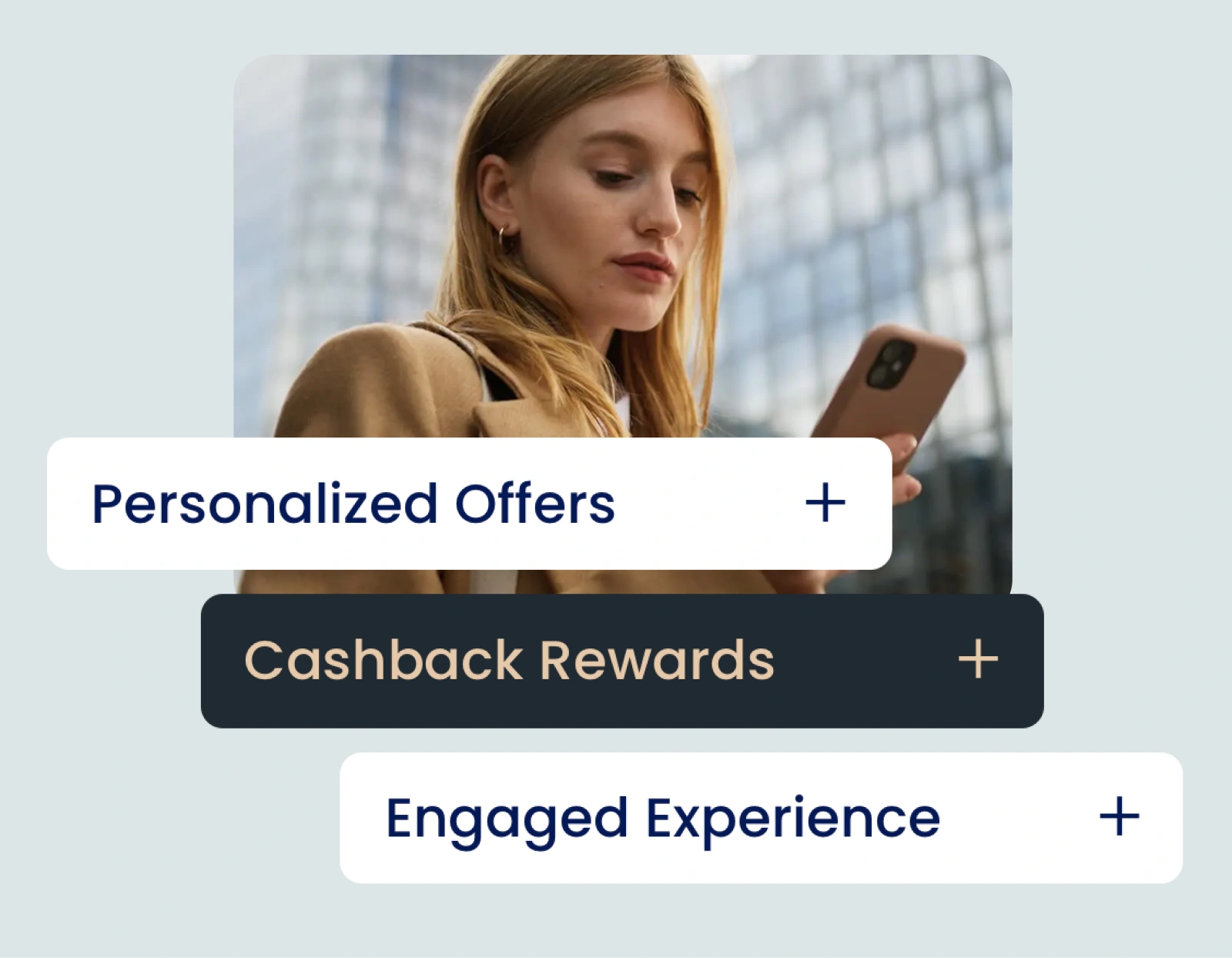
Here’s where the magic happens. When used together, loyalty programs and CLOs fill each other’s gaps.
Higher customer engagement: CLOs embedded in banking apps show high activation and usage rates. People respond when the offer ties to real behaviour, not just “join our club”. One survey found 46% of cardholders using CLOs actively seek them out. Meanwhile, loyalty programs provide longer-term bucket: recognition, status, brand community.
Revenue growth & behaviour prediction: CLOs give you precise data: you know who viewed the offer, who activated, who converted. That lets you measure and refine. Loyalty programs bring lifetime value into focus: how often does someone buy, how does their spend change over time. You can use the transaction intelligence from CLOs to power the loyalty program – targeting the most responsive users, tailoring tiers, designing better rewards.
Personalisation & timing: Loyalty programs often rely on segments (“Gold member”, “Silver member”) and generic rewards. CLOs go deeper: real-time triggers, data based on actual purchases, categories, behaviour. For instance: offering travel insurance right after a flight purchase. Or a voucher from your favourite grocery chain just before your usual shopping day. That timing + relevance works. Then, tie that into the loyalty program: those customers get extra status or perks.
Omnichannel and measurable results: CLOs shine in measurability – they track down to the transaction. Loyalty programs often struggle with attribution. But loyalty programs win in brand layering: status, emotional connection, exclusivity. Combine the two and you get measurable business growth and emotional/behavioural stickiness.
Real-world combinations
Let’s see how banks and retailers are doing this:
Banks
- A bank recommends investment products to regular savers (loyalty program data) and uses CLOs to give cashback offers at merchants they actually shop at (behavioural data).
- They run merchant-specific cashback campaigns tied to spending pattern – leveraging CROs for acquisition and active loyalty. For example: “Shop this partner store three times, get 5% cashback” via CLOs, and then you move them into a loyalty tier for more perks.
- According to eMarketer, card-linked offers help issuers attract and retain customers, especially Gen Z.
Retailers
- Suppose an electronics retailer suggests matching accessories after someone just bought a new laptop (CLO). They then invite that customer into their loyalty club with points or status (loyalty program).
- A grocery chain offers a weekend voucher (via CLO) to a customer who usually shops Friday morning. That voucher triggers the visit. Then the loyalty program tracks frequency and rewards repeated behaviour.
- Fuel & convenience networks: they run cashback on fuel purchases (CLO) to drive station preference, and then integrate that customer into their broader loyalty scheme with member tiers, early fuel price access, etc.
How to build a combined strategy
If you want your data to tick, here’s a quick checklist:
- Map out your customer journey: where loyalty members sit, where card transactions occur, what data you have.
- Segment based on behaviour and loyalty status. Use transaction data (CLO) to pick up signals: who spends where, when, how often. Use loyalty program data to layer in status, preferences, brand sentiment.
- Design offers that match behaviour and reward status. Example: “Because you frequently buy organic groceries (CLO signal), here’s a personalised voucher. And because you’re Platinum member (loyalty status), you get an extra bonus.”
- Measure everything: impressions, activations, conversions (CLO metrics). Then link to loyalty outcomes: repeat visits, incremental spend, lifetime value.
- Don’t let one cannibalise the other. Loyalty programs are not just “give everyone a coupon”; if you over-use cashback from CLOs, you might chip away margin or devalue the loyalty brand. Balance is key.
- Continuously test & optimise: CLOs give you the data to iterate – cashback or voucher, timing, audience. Use this to refine your loyalty program offerings: what perks matter, what thresholds make sense.
- Integrate across channels: online, in-store, app. Both loyalty and CLO should feel seamless to the customer – not two separate silos.
Conclusion
Probably more than ever, the challenge in marketing and payments isn’t “find a new channel,” but “connect the channels we already have”. With enriched transaction data, real-time offers, loyalty tiers, status rewards – all stitched together – you create a force that’s more than the sum of its parts. So don’t pit loyalty programs against card-linked offers. When they play together, they win together.
Want to see how can card-linked offers work for your brand?
Get in touch with us and discover how to turn your campaigns into a data-driven growth engine.
FAQs
Loyalty programs (points, tiers, status) focus on long-term relationships and repeat custom, tracking general behaviour over time. Card-linked offers (CLOs) focus on immediate, transactional rewards (cashback or vouchers) tied directly to a customer's payment card, providing a seamless incentive at the point of sale.
Choosing one leaves critical gaps. Loyalty programs often suffer from low engagement, while CLOs provide the immediate reward needed to revive them. By combining the two, businesses link the long-term emotional commitment (loyalty) with the short-term, measurable revenue driver (CLO), boosting overall customer spend.
CLOs introduce precise, real-time transaction data (first-party data) that loyalty systems often lack. This gives immediate metrics for offer activation and conversion. By combining this with long-term data (lifetime value) from the loyalty scheme, you gain a complete picture to measure both quick ROI and enduring customer stickiness.


Marketing professional with B2B, fintech, e-commerce, and retail experience. She connects banks and retailers through data-driven personalization and commerce media, turning complex topics into engaging stories.
