
Most retailers don’t struggle with a lack of data. They struggle with misinterpreting it. Ask almost any retail team how to increase transactions in retail, and you’ll hear familiar answers: more traffic, bigger discounts, better campaigns. Yet when you look at actual payment data, a different picture emerges.
Transactions don’t grow because of volume alone. They grow when businesses align with how people actually spend – not how they think they spend. This article explores what payment data really reveals about real customer behaviour – and how retailers can use those insights to increase transactions in practical ways that are often overlooked.
What payment data shows that traditional analytics misses
Most retail analytics tools track intent: clicks, visits, abandoned baskets. But payment data tracks completed behaviour. And that difference matters. Instead of assumptions, you see:
- real purchase frequency
- actual spend across categories (not just your brand)
- timing patterns tied to real-life behaviour
This shifts the core question from how to increase transactions in retail to a more precise one: Why do customers transact when they do. And what prevents them from doing it more often?
From insight to action: why most retailers get stuck
If payment data is so powerful, why isn’t every retailer already using it to increase transactions? Because the challenge isn’t access to data. It’s activation. Most organisations can describe their customers. Far fewer can turn those insights into real-time actions at scale in a way that influences behaviour. This is where the gap between insight and execution becomes visible.
1) Data exists – but not where decisions happen
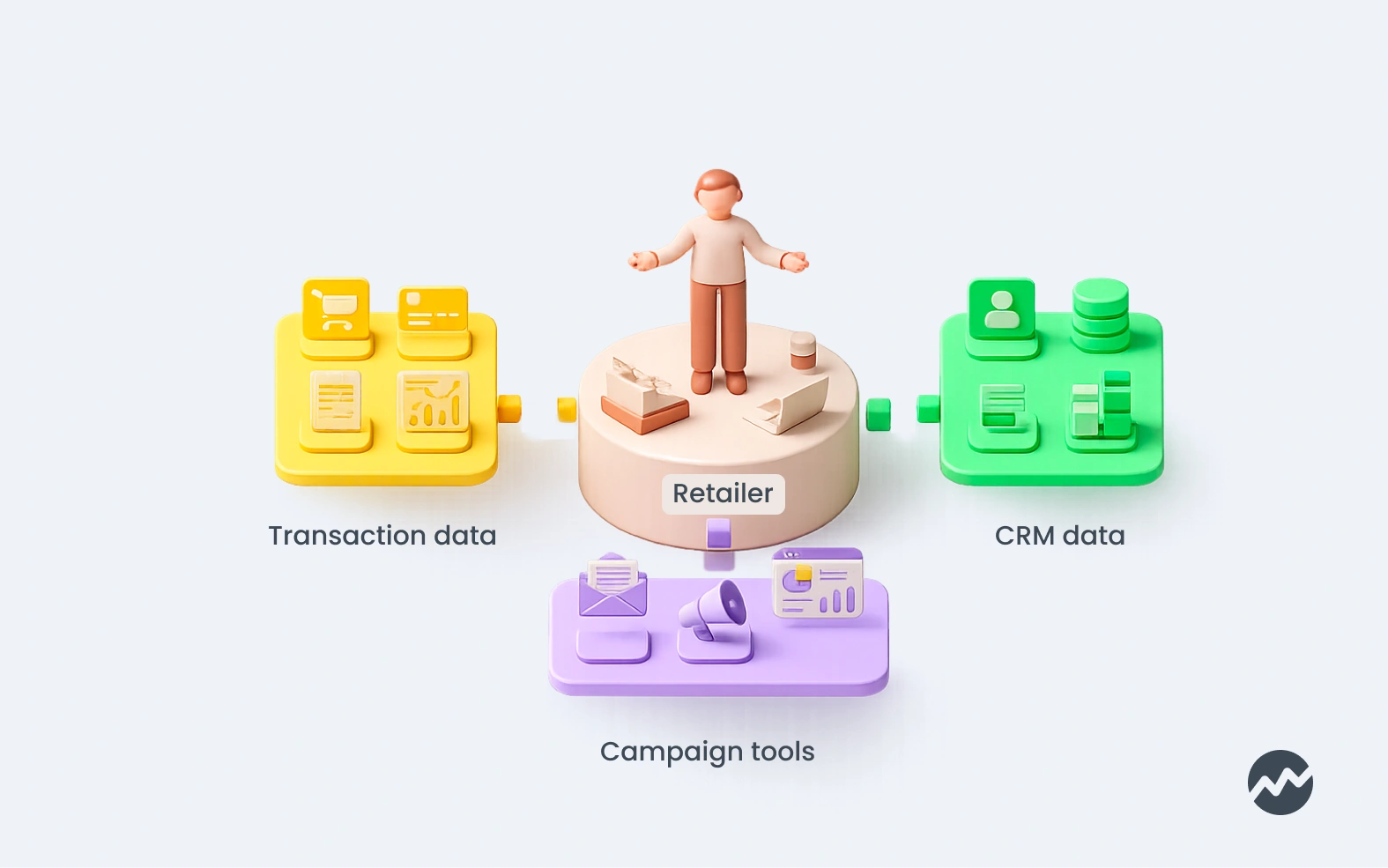
In many organisations, payment data is fragmented across systems:
- banking or transaction data in one system
- CRM data in another
- Marketing and campaign tools elsewhere
As a result, insights reach execution. Marketing teams often work with partial signals, while the most reliable indicator – actual transactions – remains underused.
2) Insights arrive too late to influence behaviour
Payment data is often analysed retrospectively through monthly reports, quarterly reviews and static dashboards. But transactions happen in real time. By the time insights are generated, the oppportunity to influence behaviour has already passed. In retail, timing isn’t just important – it’s decisive when trying to increase transactions.
3) Privacy constraints limit usability – but not as much as assumed
Privacy and regulation are often seen as blockers. And while compliance is critical, the bigger issue is often uncertainty. Many organisations:
- overestimate what they cannot do
- underestimate what is possible within compliant frameworks
The result is hesitation – and missed opportunities to use data effectively in a privacy-first way.
4) Campaign execution is not built for behavioural data
Even when insights are available, most campaign tools are not designed to act on them. They rely on:
- predefined segments
- manual campaign setup
- static targeting rules
But payment behaviour is dynamic. To increase transactions, campaigns need to respond to:
- when customers typically spend
- when they haven’t spent recently
- when they are most likely to transact again
What actually changes when you overcome these barriers
When retailers move from analysing payment data to activating it, the impact is not incremental – it’s structural. Three shifts typically happen:
- From campaigns to triggers: instead of sending offers on a schedule, interactions are based on real behaviour.
- From segments to individuals: broad targeting is replaced by context-driven relevance.
- From assumptions to evidence: decisions are no longer based on what should work – but on what consistently does.
This is where transaction growth becomes predictable, not experimental.
How to increase transactions in retail using payment data
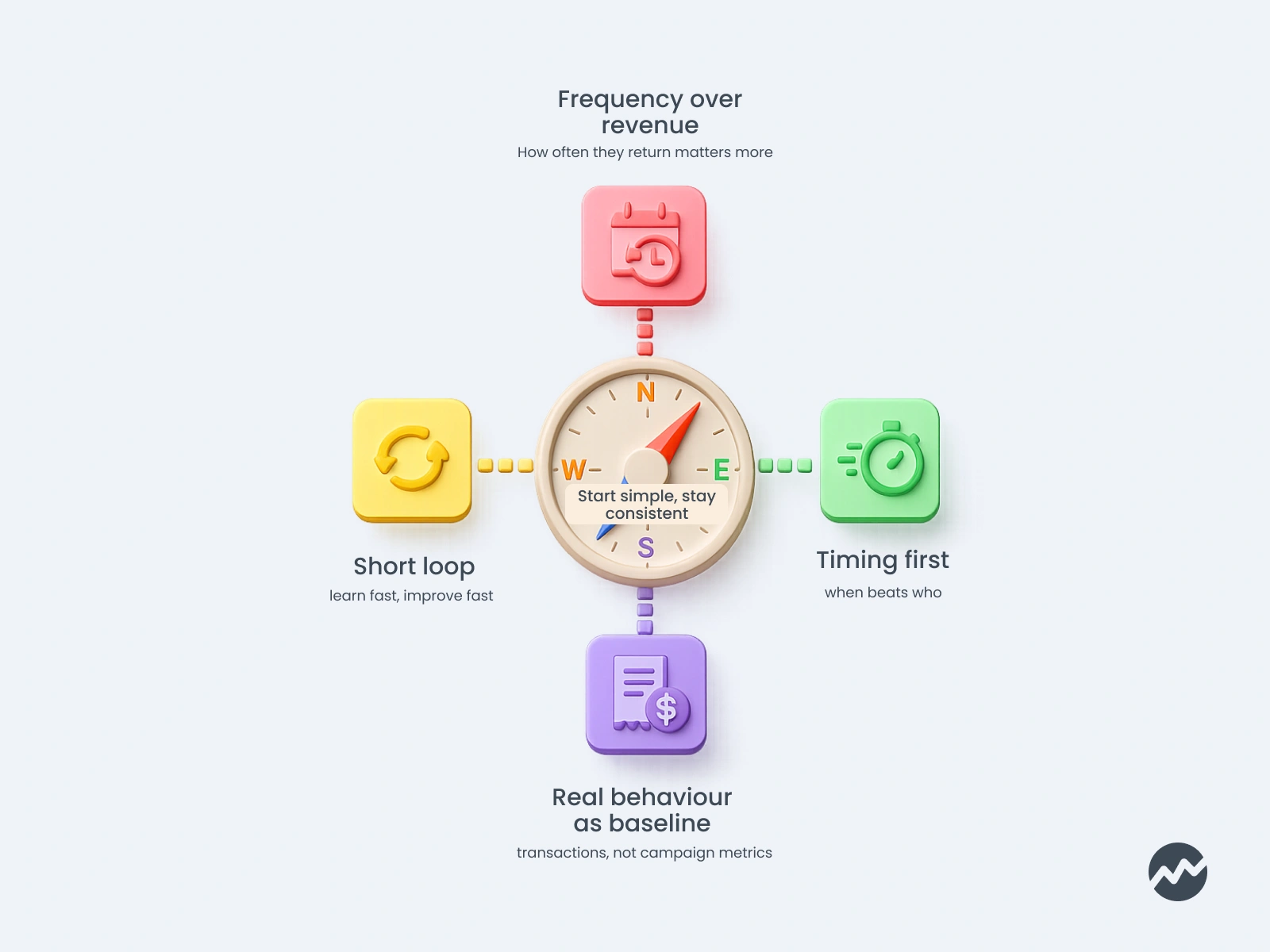
For most retailers, the goal isn’t to build a perfect system overnight. It’s to start using payment data in ways that are practical, testable, and scalable. A few principles make a significant difference:
- Focus on frequency, not just revenue: transaction growth is driven by how often customers return – not just how much they spend once.
- Start with timing, not targeting: before refining who you target, improve when you engage.
- Test against real behaviour: use actual transaction data as your baseline – not campaign metrics alone.
- Keep the feedback loop short: the faster you can learn from behaviour, the faster you can improve results.
The direction of travel: from data to behaviour-led growth
Payment data is becoming more central to how retail operates because expectations are changing. Customers now expect relevance, timing, and seamless experiences. And these expectations can’t be met through assumptions. They require a clear understanding of behaviour – and the ability to act on it.
We’re already seeing a shift towards:
- real-time decision-making
- closer collaboration between financial and retail ecosystems
- more privacy-aware approaches to data activation
Conclusion
The opportunity isn’t in collecting more data. It’s in understanding what the data already shows and using it in a more deliberate way. Increasing transactions in retail depends less on doing more, and more on acting on real customer behaviour at the right time. Data on its own won’t drive results – it becomes useful when it’s consistently applied to decisions and actions.
FAQs
The most effective way to increase transactions in retail is to align campaigns with real customer behaviour rather than assumptions. This means using data to understand when customers typically purchase, how often they return, and what triggers their spending – then acting on those insights in real time.
Payment data helps increase transactions in retail by revealing actual spending behaviour, not just intent. It shows purchase frequency, timing, and cross-category spend, allowing retailers to create more relevant, timely offers that fit naturally into customers’ habits.
More traffic doesn't always lead to more transactions because conversion depends on relevance and timing, not just volume. If campaigns don't align with real customer behaviour – when people actually buy and how often they return – increased traffic alone won't translate into more purchases.
The biggest challenges include data silos, lack of real-time activation, limited campaign tools, and uncertainty around privacy regulations. Many retailers have access to valuable data but struggle to turn it into actionable insights that can influence customer behaviour at the right moment.


A content creator with a passion for emerging tech companies and the startup community. She uses her background in media and PR for writing, editing, and brand building. Her mission is simple: she loves a good story, and strives to make complex topics clear and simple.
